
What are difficult tooth extractions?
Complex tooth extractions involve teeth that have not yet emerged through the gums, teeth with curved roots, multiple roots, or impacted teeth. Extractions may also be more difficult when a tooth is firmly attached to the surrounding bone or when the jaw is too small to allow removal of the entire root. Certain conditions, such as previous radiation treatment to the jaw, can further increase the complexity of the extraction procedure.
For both younger and older patients, tooth extraction is generally performed in a similar manner. The dentist will administer a local anesthetic to numb the area around the tooth. Once the area is numb, specialized dental instruments are used to carefully remove the tooth. In cases of impacted teeth, the tooth may need to be sectioned and removed in pieces. After the extraction, the dentist will clean the area and may place gauze or a dressing in the socket to support healing and control bleeding.
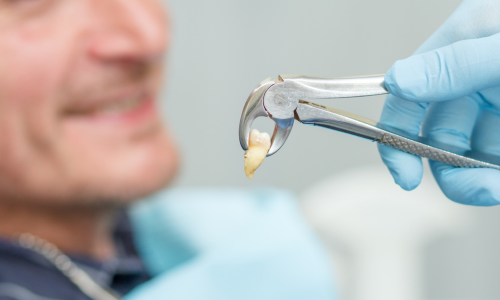
Tooth Extraction FAQs!
Still have questions? Call us at (714) 542-8888 for a free consultation.
Can a dentist pull my tooth out?
Yes, a dentist can extract a tooth when it is considered necessary for the patient’s oral health. Tooth extractions are commonly performed by a general dentist, while more complex cases may be referred to an oral surgeon. The procedure is carried out safely and effectively using appropriate techniques and anesthesia to ensure patient comfort.
Is an extraction a surgical procedure?
Yes, a tooth extraction can be a surgical procedure depending on the complexity of the case. Simple extractions are typically performed under local anesthesia, where the dentist gently loosens and removes the tooth from its socket using specialized instruments. More complex extractions, such as impacted or severely damaged teeth, may require surgical treatment by an oral surgeon. These procedures can involve making small incisions in the gum, removing bone around the tooth, placing sutures, and, in some cases, performing bone grafting to support future dental treatment and healing.
How painful is a tooth extraction?
Is there a risk of bleeding after a tooth extraction?
Yes, some bleeding after a tooth extraction is normal and expected. Mild bleeding or oozing typically subsides within a few hours as a blood clot forms in the extraction site. Patients are usually advised to bite gently on gauze to help control bleeding. If bleeding is excessive, persists for several hours, or worsens over time, it is important to contact your dentist promptly for further evaluation and care.
How to place gauze after tooth extraction?
After a tooth extraction, a gauze pad should be placed over the extraction site and bitten down on firmly to help control bleeding and encourage clot formation. The gauze should remain in place for approximately 30 to 45 minutes or until the bleeding has significantly reduced. It is important to avoid spitting, rinsing vigorously, or using a straw during the first 24 hours, as these actions can dislodge the blood clot and delay healing. If bleeding continues heavily beyond a few hours or does not improve after changing the gauze, contact your dentist for further advice.
Can difficult tooth extractions be made easy?
Complex tooth extractions are more involved than routine extractions, as they often require advanced surgical techniques and careful treatment planning. While these procedures can be challenging, modern dental technology and minimally invasive techniques help make them safer, more comfortable, and more predictable than ever before. With proper care and guidance from an experienced dental professional, most patients experience a smooth procedure and recovery with minimal complications.
Schedule Appointment
- Torrance, CA
Why Choose Dr. Kiet Tran For Your Wisdom Teeth Removal in Torrance?
Dr. Kiet Tran’s expertise in Oral and Maxillofacial Surgery, especially in wisdom teeth extraction, emerges as a premier option for patients in Torrance. His seasoned proficiency, accreditation in IV Conscious Sedation, use of cutting-edge methods, and dedicated patient care underline his exceptional reputation and advanced facility. Opting for Dr. Kiet Tran means choosing unparalleled expertise, innovative techniques, and a patient-centered approach to ensuring comfort and successful results in wisdom teeth removal within Torrance.
Dr. Tran makes difficult tooth extraction stress free
Examples of Complicated Tooth Extraction Procedures
A qualified oral surgeon should perform complex tooth extractions to help protect the surrounding teeth, gums, and jawbone from potential injury and ensure the safest possible outcome.
- Broken tooth
- Cracked or fragile teeth
- Teeth with long or curved roots
- Impacted teeth
- Inelastic and dense bone
First, proper anesthesia must be determined and administered to ensure a successful and comfortable procedure. Local anesthesia should be used to numb the area around the tooth and provide some degree of relaxation. A sedative could also be administered if necessary to calm the patient further. Next, an exploratory examination should take place to determine the best approach for the extraction. Specialized tools and instruments should be used to remove the tooth while avoiding damaging delicate surrounding structures. Pressure should be applied and exerted even to ensure a successful extraction. Finally, atraumatic extraction techniques should be followed to ensure the patient’s comfort and safety.
Oral Surgery of Extracting a Complex Wisdom Tooth
When performing a complex tooth extraction, it is essential to have a well-defined plan of action.
Many people may require oral surgery for various reasons, like experiencing facial pain, being diagnosed with TMJ (temporomandibular joint) or TMD (temporomandibular disorder), having a misaligned jaw, wisdom teeth issues, cleft lip or palate repairs, cancer, or obstructive sleep apnea. An oral surgeon is best suited to handle such oral issues, making them the ideal option for dental patients.
If tooth extractions are determined to be complicated, it is recommended to see an oral surgeon for the procedure. Cases such as entangled roots, impacted teeth, large sinuses, and mouth infections should be handled by an expert. Furthermore, if one or more teeth are already fractured, a skilled oral surgeon is needed to prevent further breakage during extraction. In addition to being qualified to perform the extraction, an oral surgeon is also trained and licensed in administering general anesthesia and IV sedation. They will also provide instructions on how to properly care for the surgical area, to ensure optimal results.